Introduction
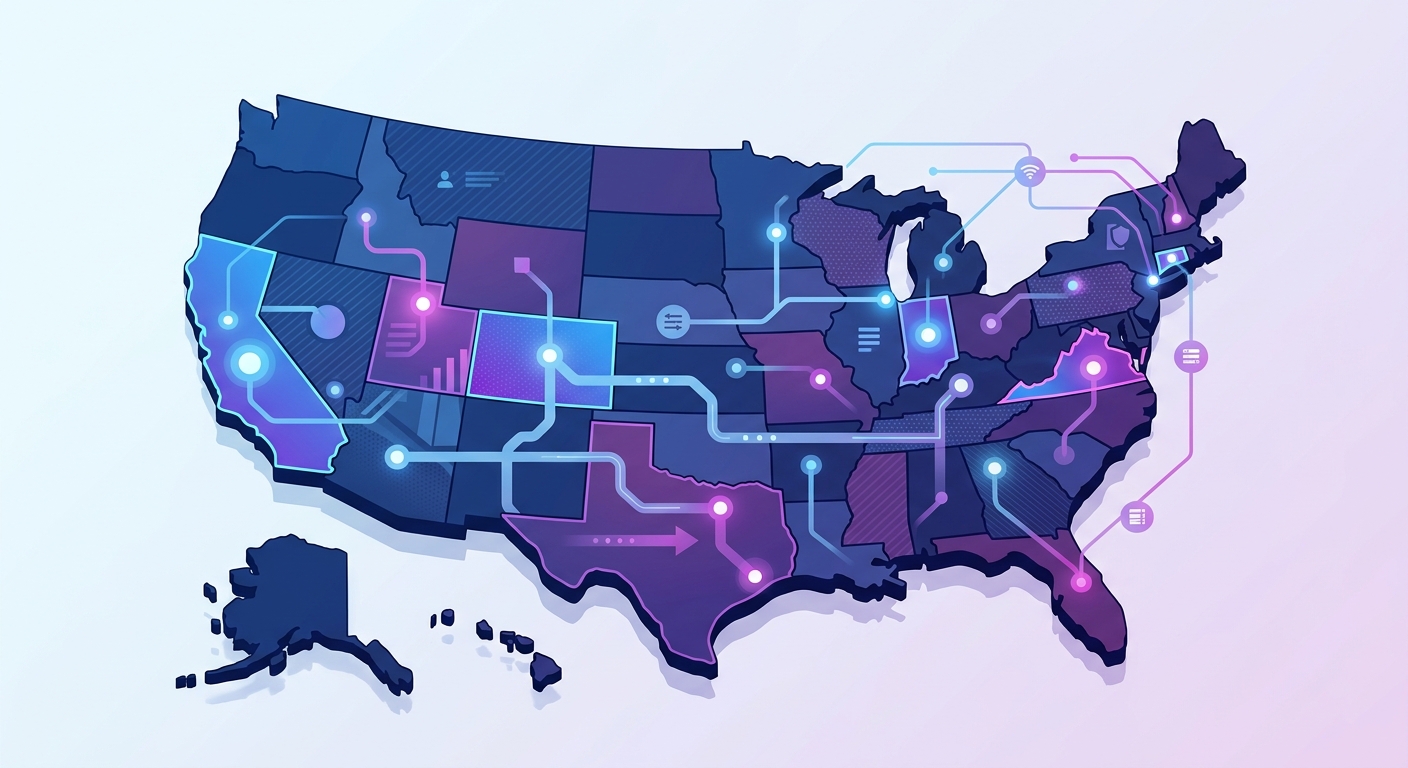
Unlike the European Union's comprehensive GDPR framework, the United States lacks a federal cookie consent law, creating a fragmented compliance landscape where businesses must navigate a patchwork of state-level regulations. The cookie consent compliance requirements USA businesses face today involve simultaneously adhering to multiple jurisdictions—each with distinct consent standards, opt-out mechanisms, and disclosure requirements. California's CCPA and CPRA led the charge in establishing consumer privacy rights, but states like Virginia, Colorado, Connecticut, and Utah have since enacted their own privacy laws with varying cookie consent provisions. This article examines three key state examples that illustrate the diverse cookie consent compliance requirements businesses must address in 2026, from California's opt-out model to emerging state frameworks that continue reshaping cookie consent compliance requirements in the USA's evolving privacy landscape.
1. California CCPA/CPRA Cookie Requirements
California established the nation's most comprehensive cookie consent compliance requirements through the California Consumer Privacy Act (CCPA) and its 2023 enhancement, the California Privacy Rights Act (CPRA). Under CCPA, businesses collecting personal information through cookies must display a prominent "Do Not Sell or Share My Personal Information" link on their homepage, allowing users to opt out of data sales within 15 business days. CPRA significantly expanded these protections by adding mandatory opt-out mechanisms for sharing data with third parties and targeted advertising, introducing sensitive personal information categories (biometric data, precise geolocation, health information), and requiring businesses to categorize cookies by purpose and obtain explicit consent for non-essential tracking technologies before deployment.
2. Virginia, Colorado, Connecticut Cookie Standards
Virginia's Consumer Data Protection Act (CDPA), Colorado's Privacy Act (CPA), and Connecticut's Data Privacy Act (CTDPA) represent the second wave of state privacy legislation, each requiring businesses to implement opt-out mechanisms for targeted advertising and data sales through cookie consent banners. Colorado stands out by mandating universal opt-out signal recognition as of July 2024, requiring websites to honor browser-level privacy preferences automatically. Virginia and Connecticut follow similar frameworks with disclosure requirements that demand clear, accessible consent interfaces explaining data processing purposes, though they offer businesses more flexibility in implementation methods compared to California's stricter approach, balancing consumer rights with operational practicality for companies navigating multi-state compliance in 2026.
3. Technical Implementation Best Practices
Building compliant cookie consent mechanisms requires strategic technical implementation that satisfies multiple USA state laws simultaneously. Your consent banner must appear before any non-essential cookies load, featuring clear opt-out mechanisms that don't use dark patterns or pre-checked boxes. Organize cookies into granular categories—necessary (authentication, security), performance (analytics), and targeting (advertising)—with detailed descriptions explaining each cookie's purpose and data collection scope. Maintain comprehensive audit trails documenting consent timestamps, user preference changes, and complete cookie inventories with vendor information. Tools like AuditSafely's Cookie Consent Audit automate multi-state compliance verification, scanning your implementation against California, Colorado, Connecticut, and Virginia requirements while identifying missing disclosures or improper cookie loading sequences that could trigger regulatory penalties.
Conclusion
Navigating cookie consent compliance requirements in the USA demands vigilance as the regulatory landscape continues evolving throughout 2026, with state-by-state laws creating complex obligations for businesses operating nationwide. Implementing comprehensive consent mechanisms now—including granular opt-in controls, transparent cookie disclosures, and proper data processing documentation—protects your organization from escalating penalties that can reach millions of dollars while simultaneously building the consumer trust essential for long-term success. Rather than manually tracking compliance across multiple jurisdictions, leverage automated cookie consent audit tools that continuously monitor your implementation, identify gaps before regulators do, and maintain the documentation necessary to demonstrate good-faith compliance efforts during investigations.